


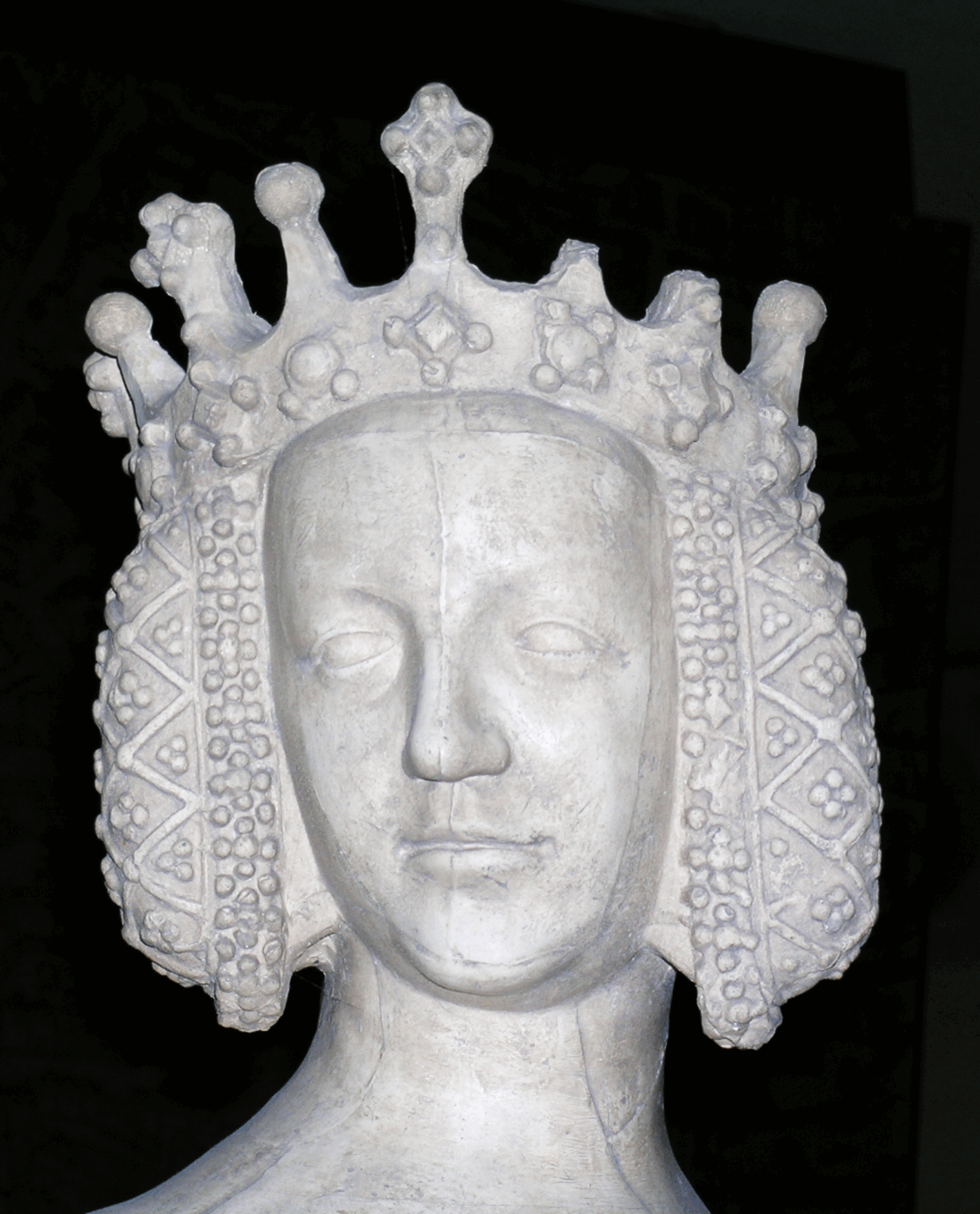
On 10 November 1407, the Queen, Isabeau de Bavière, gave birth to a child who must have been illegitimate since she had not cohabited with her mad husband for some time (hence the doubts about Charles’s legitimacy). The child was stillborn and entered as Philippe in the register. During Jeanne’s trial it was inferred that she was born on 6 January1412.
It seems difficult to see how the two facts could be related. Partisans of the “royal theory’ point out the following (which I have been unable to check)
- Later, the name Philippe was amended to Jeanne in the register
- There is no record of that child’s funeral
- The text that givesJeanne’s birthday as 6 January does not mention a year. It also says that the villagers were then woken by roosters in the middle of the night but they did not know of the impending birth.
- During the rehabilitation trial, one of Jeanne’s childhood friend said that Jeanne was three or four years older than her, which would put the year of her birth back to 1407.
- Several people in the royal household when the illegitimate child was born were called “d’Arc” and came from the area of Vaucouleurs. The captain there, Robert de Baudricourt, also had strong ties to the royal family
- Jeanne’s mother, although she was the initiator (?) of the rehabilitation trial , was never called to testify
The theory is that the child would have been secreted away and given to the D’Arc family to bring up, while another child would have been buried in its place. Some education would have been provided for the child and Yolande d’Aragon, Charles’s mother-in-law, would have realised that Jeanne was a potential asset : she would have circulated the prophecy and arranged for Jeanne to be brought to Court. Jeanne’s mission was to deliver Orleans and get the king crowned, after which she would have stayed at Court. Jeanne, however, wanted to to go further and became an embarrassment, which is why no effort was made to rescue her.
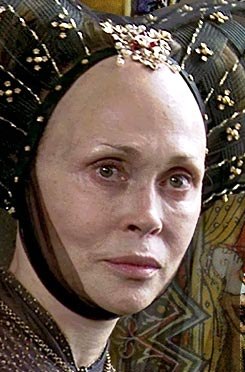
However far-fetched, this theory does explain many things about Jeanne:
- Her attitude to her family (does not know her surname, does not keep in touch with ther parents, loose relationship with her brothers)
- Her being known as the “maid of Orleans”. Latin texts say “puella aurelanensis”, not “virgo”. The name might not refer to her delivering Orléans, but to the fact that Isabeau de Bavière was thought to have had an affair with her brother- in- law, the Duke of Orleans
- Jeanne’s interest in the House of Orleans, particularly Charles who had been made prisoner at Agincourt and lived in England for over 20 years. He financed some of her clothes, including a dress made in the colours of the House of Orleans with a pattern of nettles, symbol of that house
- The “sign” she gave the Dauphin in Chinon. She might have told him that she was the illegitimate child, not him
- The treatment she received from the Dauphin (lodgings in castles, her own household etc.)
- The coat of Arms she was given by the king has a fleur-de-lys
- Her refusal to reveal certain things during her trial because “she could only tell her king” She may have said some of these things during her trial in Poitiers but the transcript has been lost.
- The length of her trial: other witches or seers, of whom there were many, were dealt with much more summarily
- The amount of ransom demanded for her which was equal to that normally expected for someone of royal blood
- Her ability to ride an lead in battle
- Her imperious attitude to the Duke of Bedford
- etc.
This still leaves the question of whether a person of royal blood would have been burnt at the stake. Jeanne des Armoises, who claimed to be Jeanne, was discredited as an impostor.